Riga, Latvia – 28 November 2025
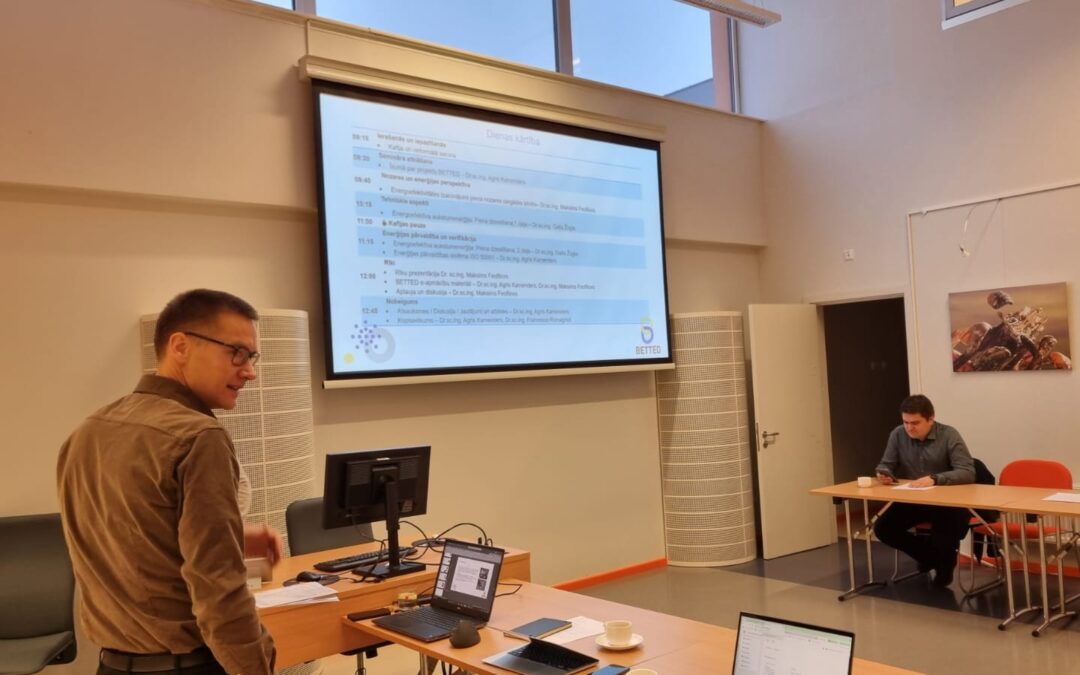
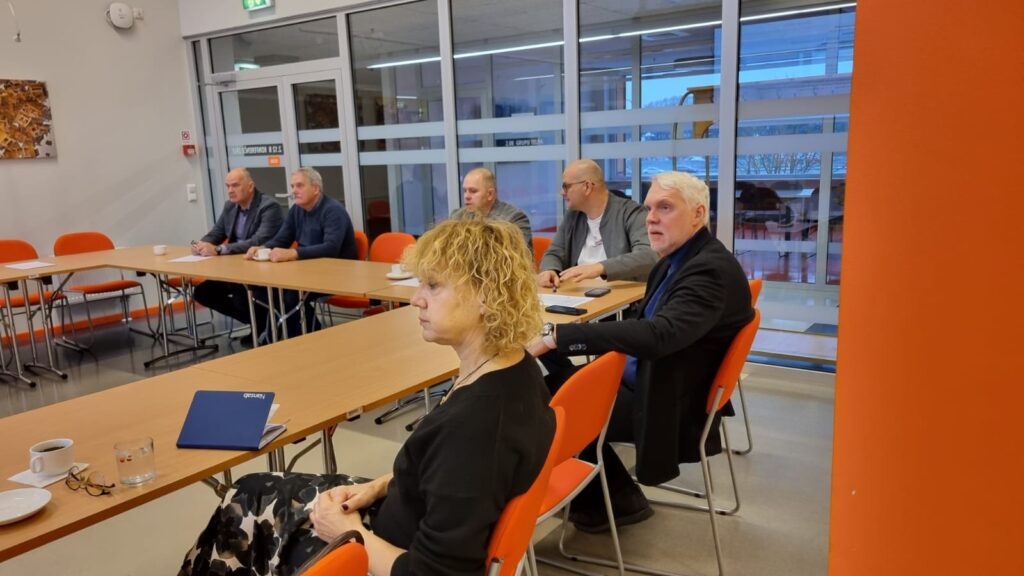
The BETTED project successfully delivered a national training seminar in Latvia on 28 November 2025 at Riga Technical University (RTU). The on-site seminar brought together representatives from the dairy sector, energy experts, engineers, and researchers to advance knowledge on energy efficiency and energy management in dairy operations.
The seminar was organised within the framework of BETTED’s capacity-building activities, which aim to conduct direct training sessions with companies and their value-chain partners, raise awareness on sustainability and energy-related challenges, and collect relevant qualitative and quantitative data to support project objectives.
Key thematic blocks of the seminar included
- Introduction to the BETTED project, outlining the role of national training seminars in supporting energy-efficient transformation of the dairy sector and engaging value-chain actors.
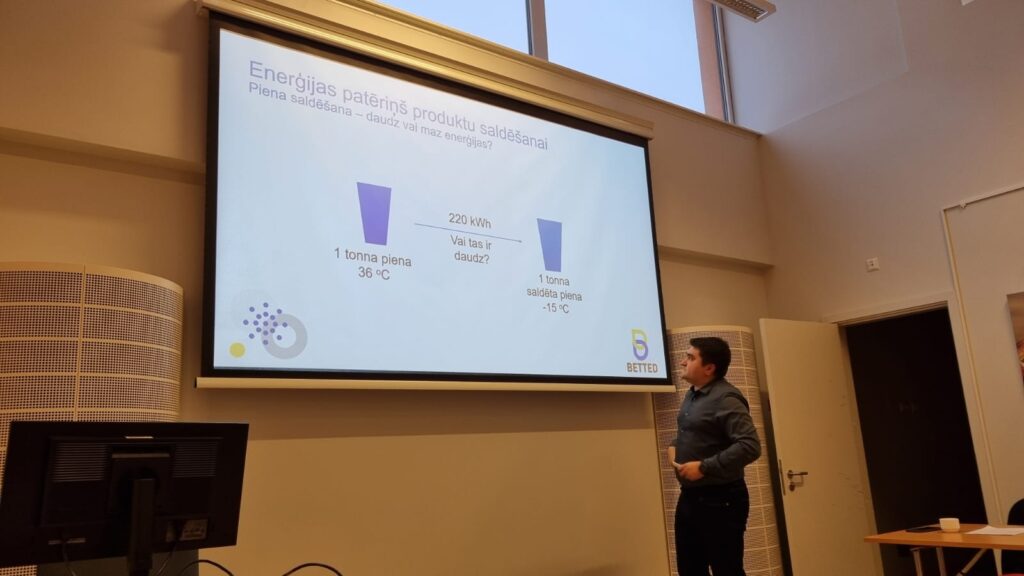
- Energy efficiency and sustainability challenges in dairy operations, with a focus on cold-chain technologies, energy consumption patterns, and operational constraints.
- Cold chain efficiency and refrigeration technologies.
- Technical approaches to energy management, including monitoring strategies, data collection requirements, and the use of BETTED calculation tools to support decision-making.
The one-day seminar included interactive discussions and feedback sessions, allowing participants share their insights and propose improvements for future seminars.
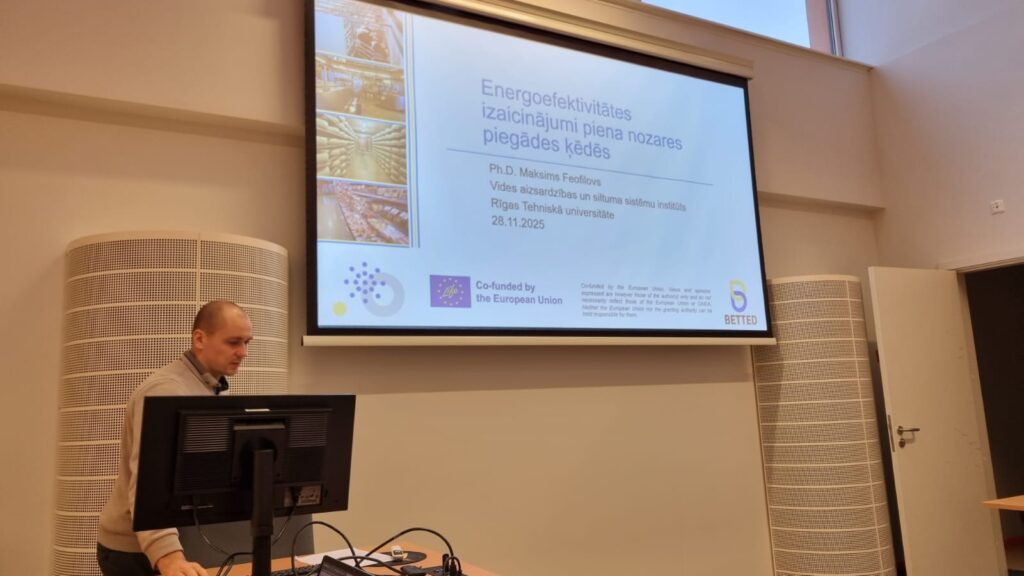
RTU provided a strong academic and technical setting for the event, and invited trainers with experience in industrial energy systems, cold-chain optimisation, and training delivery.
Attendees mainly represented dairy companies, energy specialists, engineers, and research institutions, ensuring a strong technical base and familiarity with cold-chain systems, energy-efficiency concepts, and analytical tools, enabling a highly applied and interactive training format.
The seminar demonstrated the practical value and relevance of BETTED tools, strengthened national stakeholder networks, and laid the foundation for deeper capacity building throughout the project.